


 ©2022 Maui Jim, Inc. Lahaina, Hawaii
August 24, 2026
Polarized vs. Non-Polarized Sunglasses: Which Should You Choose?
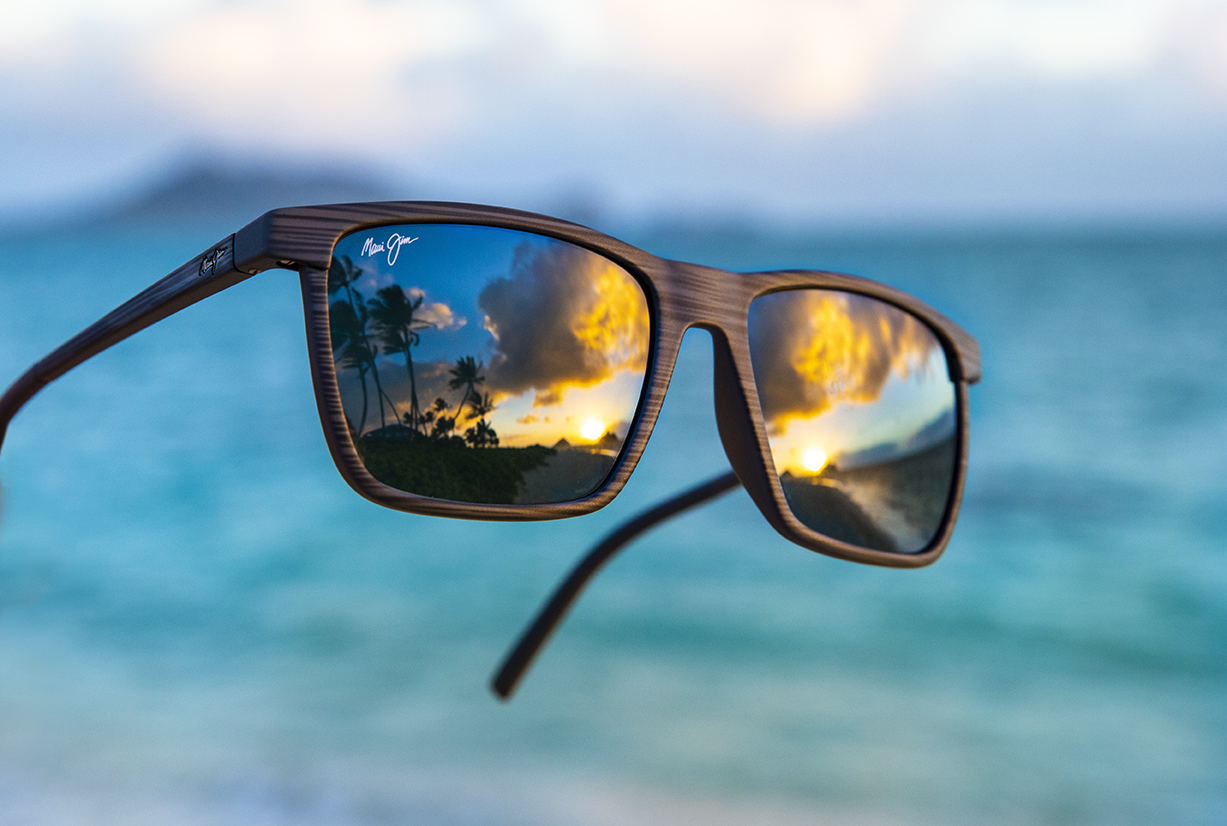
Polarized sunglasses use a built-in filter that blocks horizontal glare reflected off flat surfaces like water, roads, and snow. Non-polarized sunglasses only reduce overall brightness; they don’t filter that reflected glare at all. For most outdoor activities, driving, fishing, boating, golf, running, polarized is the better choice. Non-polarized lenses have a narrower set of use cases: checking ice conditions, reading certain LCD screens, and some aviation settings where polarization can interfere with instrument displays.
If that’s all you needed, you have your answer. Everything below explains why.
What polarization actually does
Sunlight bounces off flat, reflective surfaces, water, wet asphalt, snow, glass, in a more or less uniform horizontal pattern. That uniformity is exactly what makes it so blinding. A polarized lens has a laminated filter built into it that only lets light through at one orientation, vertical, which blocks the horizontal glare almost entirely while still letting normal, unpolarized light pass through.
A non-polarized tinted lens does something different and much simpler: it just reduces the total amount of light reaching your eye, glare included, without discriminating between light types. That’s why a non-polarized lens on a bright day can still leave you squinting at a lake or a wet road even though the world looks dimmer overall. It cut the brightness. It didn’t cut the glare.
Polarized vs. non-polarized, by activity
| Activity | Recommendation | Why |
| Driving | Polarized | Cuts glare off wet pavement and other vehicles’ windshields |
| Fishing / boating | Polarized | Removes surface glare so you can see beneath the water |
| Golf | Polarized | Reduces glare on fairways and greens without losing depth perception |
| Running / cycling | Polarized | Comfortable in shifting light without eye strain |
| Snow sports | Depends | Polarized cuts glare off snow, but can occasionally mute contrast needed to spot icy patches or moguls; many skiers still prefer polarized, some prefer non-polarized for that reason |
| Flying (pilots) | Non-polarized | Polarization can interact with cockpit LCD displays and windshield coatings in ways that distort or hide information |
| Checking screens (phones, some dashboards) | Non-polarized | Certain LCD screens emit light at an angle that can appear dim, distorted, or black through a polarized lens |
The case for polarized
For the large majority of people, polarized is simply the better everyday lens. It reduces eye strain in bright, reflective conditions, improves visual comfort over a full day outside, and makes it genuinely easier to see beneath the surface of water, which matters if you fish, kayak, or spend time on a boat. It’s also why Maui Jim built its entire lens lineup, HT, HCL Bronze, Blue Hawaii, Maui Rose, HT Gold, MauiPure, around PolarizedPlus2 technology as the baseline, not an upgrade.
The case for non-polarized (it’s a short list)
Non-polarized lenses aren’t inferior, they’re just built for a narrower job. Pilots are trained to avoid polarized lenses because some cockpit displays use polarized light themselves, and the combination can make instruments unreadable at certain angles. Some skiers and snowboarders prefer non-polarized lenses specifically because polarization can occasionally smooth over the subtle glare that helps you spot ice or changes in snow texture. And if you regularly need to read an LCD screen, some in-car displays, certain ATMs, through your sunglasses, non-polarized avoids the screen going dark or distorted.
Outside of those specific cases, there isn’t a strong argument for non-polarized over polarized. It comes down to price in some categories: non-polarized lenses can be less expensive to produce, which is part of why lower-cost sunglasses skip the feature.
Maui Jim’s approach
Maui Jim builds PolarizedPlus2 into every lens, pairing the glare-blocking filter with color enhancement so polarization doesn’t come at the cost of a flat, dull view. That’s the tradeoff some cheaper polarized lenses make: they cut glare but wash out color and contrast in the process. The lens family you pick, HCL Bronze for warm all-around contrast, Blue Hawaii for water, Maui Rose for sports, still determines how the world looks. Polarization is the baseline every one of those families is built on.
Frequently asked questions
Is it worth paying more for polarized sunglasses?
For most people, yes. Polarized lenses meaningfully reduce eye strain and glare during driving, water activities, and general outdoor use. The upgrade is most noticeable around water, wet roads, and snow, where reflected glare is strongest.
Can polarized sunglasses make it harder to see phone or car screens?
Some LCD screens, including certain car dashboards and a small number of phone models, emit light at an angle that can appear dim or partially black through a polarized lens. It depends on the specific screen technology; most modern phone screens are unaffected.
Are polarized sunglasses bad for skiing?
Not for most skiers, but it’s worth knowing the tradeoff. Polarization cuts glare off snow effectively, but a small number of skiers and snowboarders find it slightly harder to spot icy patches or subtle terrain changes, since some of that visual information comes from the glare itself.
How can I tell if my sunglasses are actually polarized?
Look at a reflective surface, water, a car windshield, a glass tabletop, through the lenses and tilt your head roughly 60 degrees. If the glare noticeably changes or disappears as you tilt, the lenses are polarized. Non-polarized lenses won’t show that shift.
Do all Maui Jim sunglasses come polarized?
Yes. Every Maui Jim lens is built on PolarizedPlus2 technology as the standard, not an add-on, across every lens family the brand offers.