

 ©2022 Maui Jim, Inc. Lahaina, Hawaii
November 17, 2026
What Is VLT in Sunglasses? Choosing the Right Lens Darkness
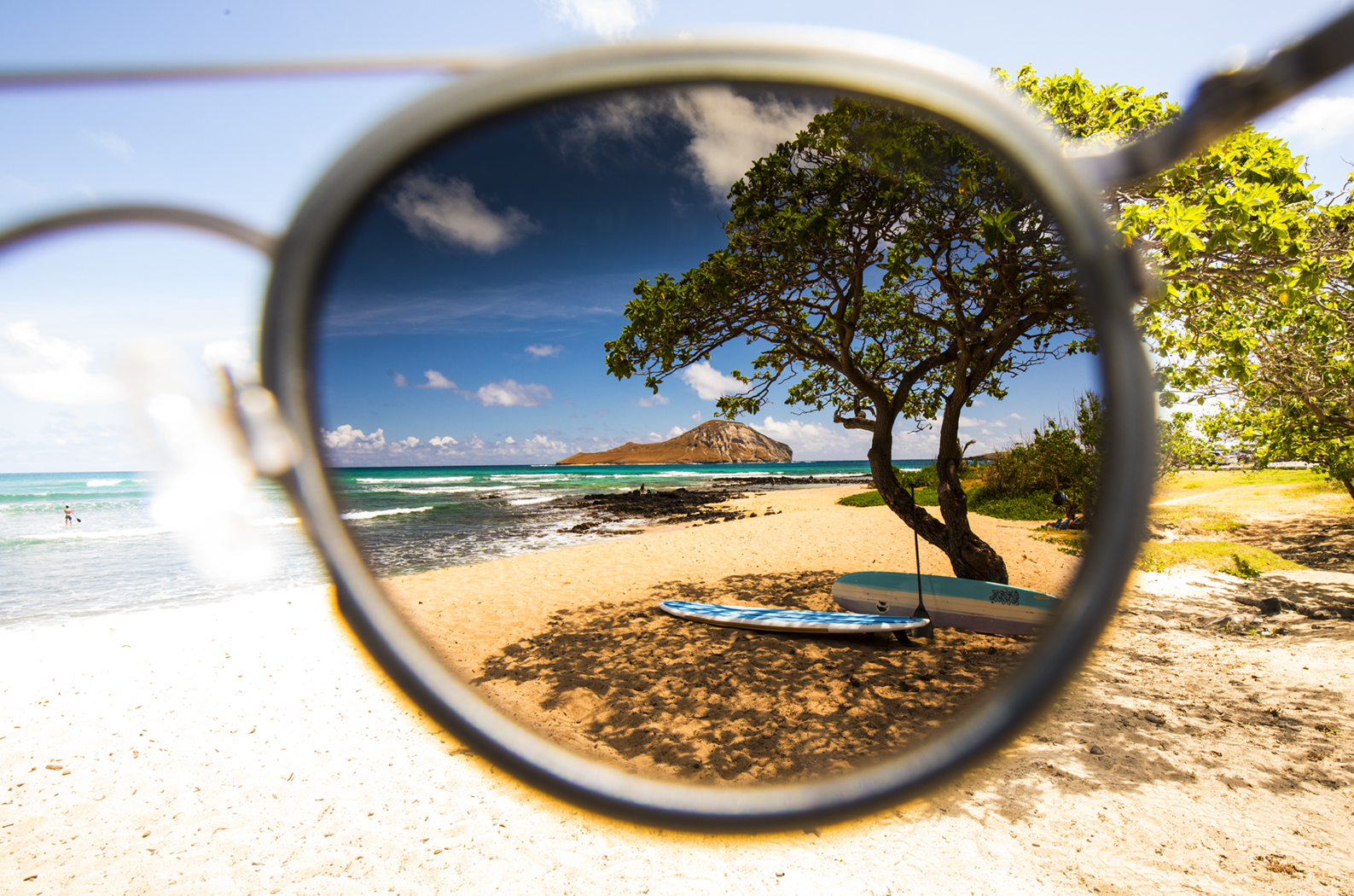
VLT stands for visible light transmission: the percentage of visible light that passes through a lens. A lower VLT means a darker view; a higher VLT means more light reaches your eyes. A lens with 15% VLT transmits less visible light than one with 35% VLT. Neither number, by itself, tells you how much ultraviolet protection the lens provides or whether it is polarized.
That last distinction matters. Shopping for the darkest lens you can find is not the same as choosing the right lens for your day. Start with the conditions, then look at the lens specifications.
What a VLT number actually tells you
Think of VLT as a description of brightness through the lens. It helps you compare how much light two lenses transmit, even when their colors look similar in a product photograph.
It is not a comfort score. Two people can prefer different lenses in the same conditions, and fit still affects how much light enters around the frame. A useful comparison starts with the exact lens option, not just the frame name or the color of its mirror.
Four details to read separately
| Specification | What it tells you |
|---|---|
| VLT | How much visible light passes through the lens; lower values mean a darker view |
| UV protection | Whether the lens provides the stated protection against ultraviolet radiation |
| Polarization | Whether the lens filters reflected glare |
| Lens color | The tint you look through, which can influence how colors and contrast appear |
Match the lens to the light you will encounter
For a long afternoon in bright, open conditions, a lower-transmission lens may feel more comfortable than a lighter one. For an overcast walk or a route with long shaded sections, a lens that lets through more light may be easier to use.
Consider the whole outing. The light at a sunny parking lot can be very different from the light under trees an hour later. Before buying, describe that change to your retailer. If one lens cannot comfortably cover your routine, carrying a second suitable pair may make more sense than forcing the darkest option to do everything.
For winter sports, use guidance on choosing goggles alongside the manufacturer’s lens specifications. Bright snow and an overcast slope create different demands. A lens that feels comfortable at lunch on a sunny terrace may be too dark once cloud moves across the mountain.
Lens color is not a shortcut to a VLT number
Gray, brown, rose, and green describe lens colors, not universal transmission values. A mirrored finish adds another variable. You cannot reliably work backward from a photograph and decide that every blue mirror has the same darkness.
Maui Jim’s lens technology information is a useful starting point for comparing the intended conditions of different lens options. Neutral Grey is positioned for bright light, while Maui HT is designed to transmit more light. Ask about the exact lens you plan to order, particularly when comparing prescription and nonprescription options.
If a retailer does not publish a VLT figure, ask for the manufacturer’s specification. An unavailable number should stay unavailable. It should not be replaced with a guess based on lens color.
A darker lens is not automatically a better lens
Visible darkness and UV protection are separate specifications. Look for the stated UV protection rather than judging the lens by how dark it looks. Similarly, a dark lens is not necessarily polarized; check that feature on its own.
Finally, choose for usable vision. If your view becomes too dim as daylight falls, change to appropriate eyewear. Ordinary tinted sunglasses are not a way to improve nighttime driving. The right lens should suit the light you have, not just the brightest conditions you might eventually encounter.
Frequently asked questions
Is a lower VLT better?
It depends on the conditions. Lower VLT means a darker lens, which can suit bright light. Higher VLT lets through more light and may be more comfortable in dimmer conditions.
Does 15% VLT mean 85% UV protection?
No. VLT measures visible light transmission. UV protection is a separate specification and must be checked separately.
Do polarized lenses always have a low VLT?
No. Polarization describes glare filtering, not a fixed level of darkness. Polarized lenses can have different visible light transmission values.
Can two lenses of the same color have different VLT values?
Yes. Color alone does not establish transmission. Compare the specifications for the exact lens options, including their coatings and treatments.
What VLT should I choose for winter?
There is no single winter number. Match the lens to the actual conditions and activity, and use the manufacturer’s guidance for the specific sunglasses or goggles.